Energy Efficiency
Get Started with a Free Consultation
Homeowners facing rising electricity bills generally take one of three approaches: accept the higher cost and budget around it, improve efficiency to lower usage, or generate their own power with solar and battery storage to control costs long-term. Here's how to figure out which one fits your situation.
If your electric bill has crept up over the last year or two, you're not imagining it — and you're not alone, whether you're in Texas or Florida. Texas residential electricity rates have risen roughly 25% since Winter Storm Uri in 2021, and the U.S. Energy Information Administration expects ERCOT electricity demand to keep climbing by double digits through 2026 as data centers and industrial users come online (source: EIA). Florida homeowners have seen their own version of this story: regulators approved a fresh round of rate increases for FPL, Duke Energy Florida, and TECO taking effect in 2026, with Tampa Electric customers alone seeing bills climb roughly 86% since 2020. Two different grid systems, two different regulatory setups — the same bottom line for homeowners. We talk to thousands of homeowners across both states every year, and when it comes to rising energy costs, we're seeing three distinct approaches emerge. None of them is objectively "right." But understanding all three will help you figure out where you land.
Some homeowners are treating higher energy costs as a permanent line item. Summer bills of $400–500 become the new normal. They adjust the household budget, maybe cut back somewhere else, and move on with their lives.
This approach can work — under the right conditions:
Here's the honest truth, though: most people who take this path aren't thrilled about it. In our conversations with homeowners, the accept-and-budget crowd usually isn't happy — they've just concluded that the alternatives feel too complicated, too expensive, or too far out of reach right now. It's less a decision and more a default.
The second group of homeowners looks inward first: efficiency. New HVAC systems, insulation upgrades, smart thermostats, duct sealing, LED lighting throughout the house.
This approach earns its popularity because the math genuinely works:
The limitation is real, though: after the upgrade, you're still 100% dependent on grid pricing. Your bill might drop $80–100 a month, which is meaningful. But if rates keep climbing at the pace they have been, you can find yourself back at today's bill amount in just a few years — except now you're paying more for the same usage, not less for more comfort. Optimization solves a math problem. It doesn't solve a control problem.
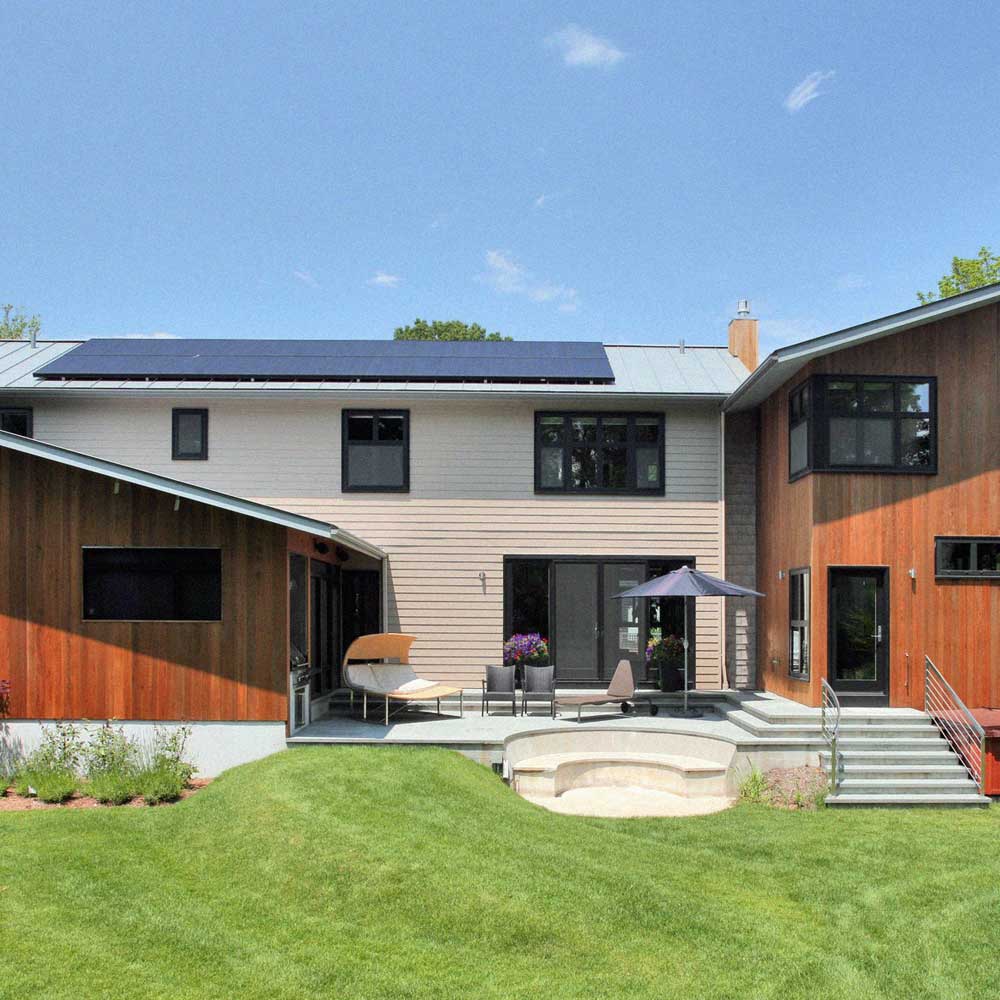
A smaller but fast-growing group of homeowners is taking a different stance entirely: solar, batteries, or both. Their thinking goes something like, I don't want to spend the next 20 years hoping rates don't spike. I want to generate my own.
This approach:
It's the only one of the three approaches that changes your relationship to the grid rather than just your bill. Instead of hoping the utility company doesn't raise rates again next summer, you've removed a meaningful chunk of that variable from your life entirely.
Accept & Budget Monthly bill impact: continues rising with rates Upfront cost: none Typical payback: N/A Grid dependence: 100% Best for: homeowners planning to move soon, or whose income is keeping pace with rate increases
Optimize (HVAC & Efficiency) Monthly bill impact: drops $80 to $100/mo Upfront cost: moderate Typical payback: 5 to 7 years Grid dependence: still 100% Best for: homes with a 10-plus year-old HVAC system or known duct and insulation issues
Generate (Solar & Battery) Monthly bill impact: locked in for 25-plus years Upfront cost: higher Typical payback: savings begin immediately, full payback varies by system Grid dependence: minimal Best for: homeowners planning to stay long-term or prioritizing outage resilience
None of these three approaches is objectively correct. It depends entirely on your home, your timeline, your budget, and, maybe most importantly, what you're actually trying to solve for.The families who report the highest satisfaction tend to combine approaches rather than pick just one. A common and smart sequence looks like this:
This isn't an all-or-nothing decision. It's a sequence, and the right order depends on where you're starting from. Someone with a 15-year-old HVAC system on its last legs should probably address that first, regardless of what else is on their radar. Someone whose system is only a few years old but who just lived through a third multi-day outage this year might reasonably prioritize resilience instead.
Here's the insight that matters more than any specific technology: rising energy costs are forcing homeowners to think differently about power itself. For decades, the routine was simple. The bill arrived, you paid it, you moved on. Nobody thought much about it. Now, more homeowners, from Austin and Houston to Tampa and Orlando, are asking different questions. Do I have options here? Do I want more control over this part of my life? What's the actual trade-off if I do nothing. That shift in mindset, from passive bill-payer to active decision-maker, is the real story. The technology is just how you act on it.
Not sure which approach fits your home? Every house is different: your HVAC's age, your roof, your usage patterns, and your goals all factor into the right answer. A quick conversation can help you figure out what to prioritize first.